Understanding Brass Patina (and How to Clean It Gently)
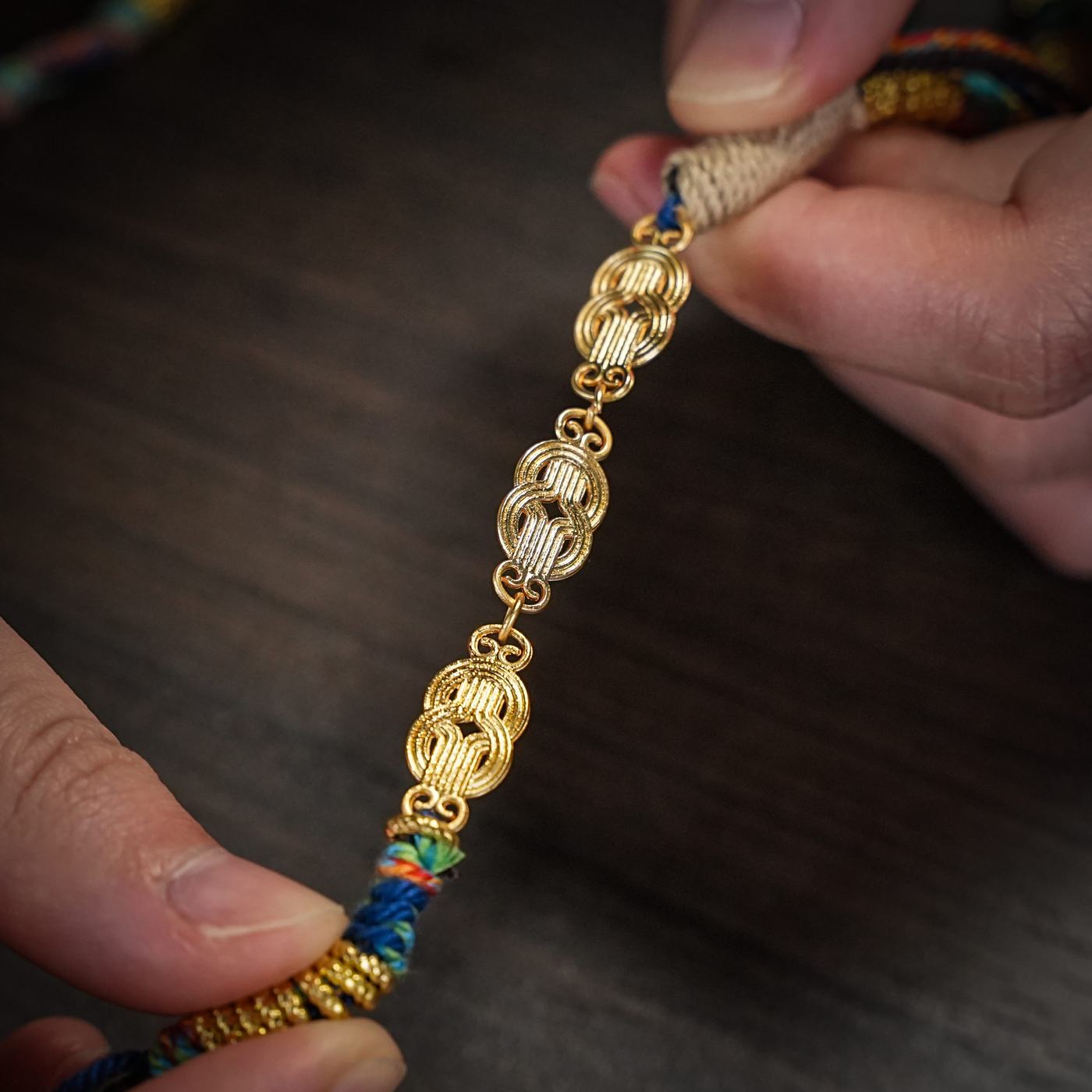
If your brass gau pendant looks a little different after a few months than it did the day it arrived, that is expected — and for most wearers, welcome. Here is what is actually happening, and how to manage it without accidentally damaging the finish.
Why brass darkens
Brass is an alloy of copper and zinc, and copper reacts slowly with oxygen, moisture and the mild acids present in skin oils and sweat. That reaction forms a thin surface layer — patina — which is typically a warm brown, sometimes with soft greenish undertones in humid climates. The rate depends on how often the piece is worn, your skin chemistry, and your local climate; some people see visible change within weeks, others over many months.
The chemistry, briefly
The warm brown tone most wearers see first is largely copper oxide, forming as the surface slowly reacts with oxygen in the air. Given enough moisture and time, a further reaction can produce basic copper carbonates — the same family of compounds responsible for the green verdigris seen on old copper roofing and bronze statues — which is why a pendant worn for years in a humid climate may eventually take on a subtle green undertone alongside the brown. Both are the same general category of natural, stable surface change; neither indicates anything is structurally wrong with the piece.
Patina is not damage
It is worth separating two different things that can happen to brass: patina, which is a stable surface layer that actually helps protect the metal underneath from further reaction, and corrosion or pitting, which is deeper, uneven damage usually caused by prolonged contact with harsh chemicals or moisture trapped against the metal. Ordinary daily-wear patina is the former — cosmetic, even, and for many wearers part of what makes a piece feel truly lived-in rather than mass-produced.
Many jewellery traditions that use brass or bronze, from Tibetan gau boxes to Japanese bronzeware, treat this darkening as desirable, sometimes even hastened deliberately. If you like the look of an aged pendant, doing nothing at all is a perfectly valid choice.
Valued across cultures, not just tolerated
The instinct to see patina as something to fight rather than something to appreciate is not universal. In Japanese aesthetics, the concept of wabi-sabi explicitly values the beauty of age, wear and imperfection over pristine newness, and aged bronze and copper vessels are prized specifically for the character their patina carries. Western antique and militaria collectors similarly treat an untouched, naturally aged patina on old bronze or brass as a mark of authenticity, often worth more than a piece stripped back to bright metal. Tibetan tradition sits comfortably in the same camp — a gau box that has visibly darkened through years of devoted daily wear is generally seen as more meaningful, not less, than one still bright from the workshop.
The two-minute gentle clean
If you would rather keep the brass looking brighter, or want to remove a build-up of skin oil without stripping the patina entirely, this simple method is safe for the engraved surface:
- Dry wipe first. Use a soft, lint-free cloth to remove surface dust and loose residue before introducing any moisture.
- Slightly damp cloth, if needed. Dampen a corner of the cloth with plain water — not a cleaning solution — and gently wipe the raised engraved areas where oils tend to collect.
- Dry immediately. Buff with a dry section of the cloth right after, so no moisture sits on the metal.
- Stop there. A light, even sheen is the goal — you are not trying to restore a mirror-bright, brand-new finish, which would require removing patina you may want to keep.
What to avoid entirely
- Metal polish or brass cleaner. Commercial polishes are often abrasive enough to wear into fine engraving detail over repeated use, softening the design.
- Vinegar, lemon juice or baking soda "hacks." These home remedies work by chemically stripping patina, which can leave the surface blotchy rather than evenly restored.
- Ultrasonic jewellery cleaners. The vibration and cleaning solution are made for solid gold or silver settings, not for a sealed painted thangka behind a protective layer, which the vibration and moisture could affect.
- Submerging the whole pendant. Keep water contact to the exterior of the box only; the seal protecting the thangka inside is not designed for submersion.
Common questions
My pendant has uneven dark spots — is that normal?
Yes, slightly uneven patina is completely normal, since it depends on exactly where the metal contacts skin, clothing and air most. If you notice flaking, pitting or a greenish crust that feels rough rather than smooth, that is worth a gentle clean sooner rather than later.
Will cleaning it remove the gold-tone finish?
The gentle method above is safe for the finish. Abrasive polishes are the main risk to gold-tone plating, which is another reason to avoid them.
How often should I clean it?
There is no fixed schedule — many wearers do a light wipe every few weeks and a fuller clean every few months, adjusting based on how quickly patina builds up for them personally.