How to Wear and Use a Gau Box: A Beginner's Guide
A gau box pendant looks straightforward enough — cord, box, image — but if this is your first one, a few practical questions come up almost immediately: where exactly does it sit, how do you adjust the length, and is there an etiquette you should know before wearing it out in public? Here is the plain, practical answer to all three.
Where to wear it
Traditionally, a gau is worn over the heart, at a length where the box sits roughly at mid-chest rather than at the collarbone or the stomach. This is not an arbitrary styling choice — the placement close to the heart is part of the symbolism, treating the pendant as something carried with you rather than displayed at a distance.
Practically, this means most people find a slightly longer cord more comfortable and more in keeping with tradition than a short choker-style length, though there is no rule against wearing it shorter if that suits your neckline or personal style better.
Opening, closing and adjusting
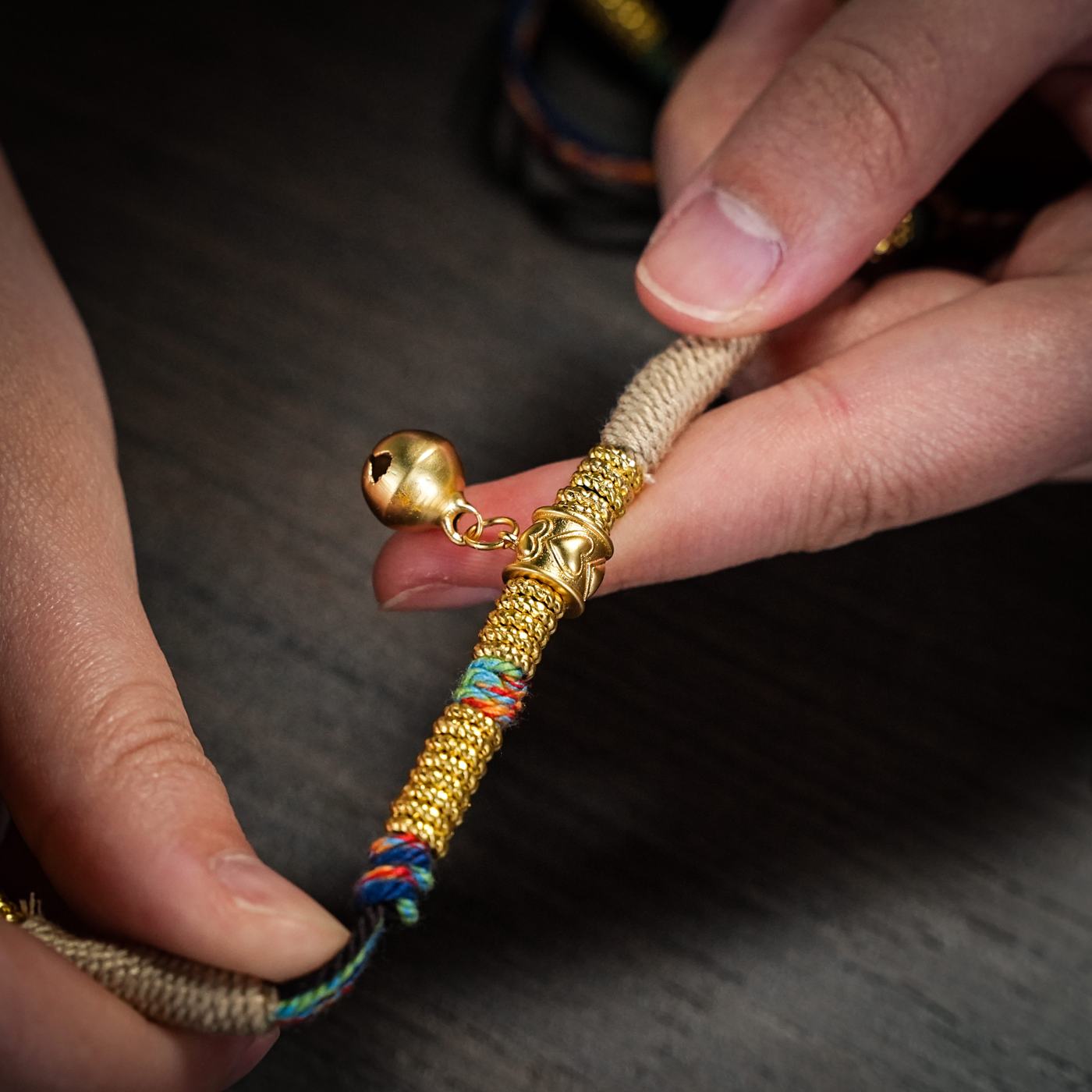
selenecc pendants use a hand-braided cord finished with a sliding knot rather than a metal clasp. To adjust the length, hold the knot between your fingers and gently slide it up toward the neck to shorten the loop, or down and away from the neck to lengthen it. The knot is designed to hold its position under normal wear and release smoothly when you want to change it — avoid yanking it forcefully, since sudden force is more likely to loosen the braid than a slow, deliberate slide.
The gau box itself is sealed shut at the front to protect the thangka inside from moisture, oils and handling; it is not designed to be opened and closed like a locket. If you want to display the image without wearing it, simply set the pendant down face-up rather than attempting to remove the front panel.
Everyday etiquette
There is no strict rulebook, but a few habits are widely observed by long-time wearers out of respect for the image inside:
- Avoid wearing it into a bathroom or during intimate activity. This mirrors the general Buddhist etiquette around sacred images, and is the most commonly cited guideline.
- Take it off for very vigorous activity such as contact sports or swimming, less for symbolic reasons and more to protect the cord and the sealed painting from repeated impact and chlorine or salt water.
- Set it down rather than toss it when you take it off, ideally somewhere clean and elevated rather than on the floor.
None of this requires special ceremony — it is closer to the quiet care you would give any object that matters to you, applied consistently.
Combining it with other jewellery
A gau pendant layers well with finer, simpler chains, since its own cord and pendant already carry visual weight and colour. Many wearers keep it as the sole statement piece around the neck and add rings, earrings or a watch elsewhere rather than stacking multiple necklaces, which can compete with the thangka detail rather than complement it.
Under or over clothing?
Both are common, and the choice is entirely personal rather than dictated by tradition. Wearing it under a shirt keeps it private and close to the skin, which some wearers prefer for a more personal, quiet connection to the piece. Wearing it visibly over clothing lets the artwork and craftsmanship show, which suits the pendant equally well given how much detail goes into the front face. Some wearers switch between the two depending on the setting — visible for everyday wear, tucked away for more formal or professional occasions.
Travelling with your pendant
The brass gau box is small enough that it generally passes through airport metal detectors and security screening without any issue, the same as any other pendant-scale piece of jewellery — there's no need to remove it specifically for security unless an officer asks, which is uncommon for an item this size. For longer trips where you won't be wearing it constantly, store it in its original pouch or gift box inside carry-on luggage rather than checked baggage, both to keep it safe from rough handling and to keep it within reach.
Common questions
Can I shorten the cord permanently by cutting it?
We would not recommend it — cutting the braid removes the ability to adjust length later and can affect how the sliding knot holds. If you consistently want a shorter length, sliding the knot up and tucking the excess is the safer approach.
Is it okay to shower quickly while wearing it?
Brief water contact will not damage the pendant, but prolonged exposure to steam, soap and shampoo can dull the cord's colour over time, so removing it for a full shower is the better habit long-term.
What if the cord gets tangled?
Lay the pendant flat and work the knot loose slowly rather than pulling on the tassels, which are decorative rather than structural and can fray if tugged directly.