Tibetan Buddhist Jewellery Explained: Gau Boxes, Malas, Dzi Beads and Protection Cords
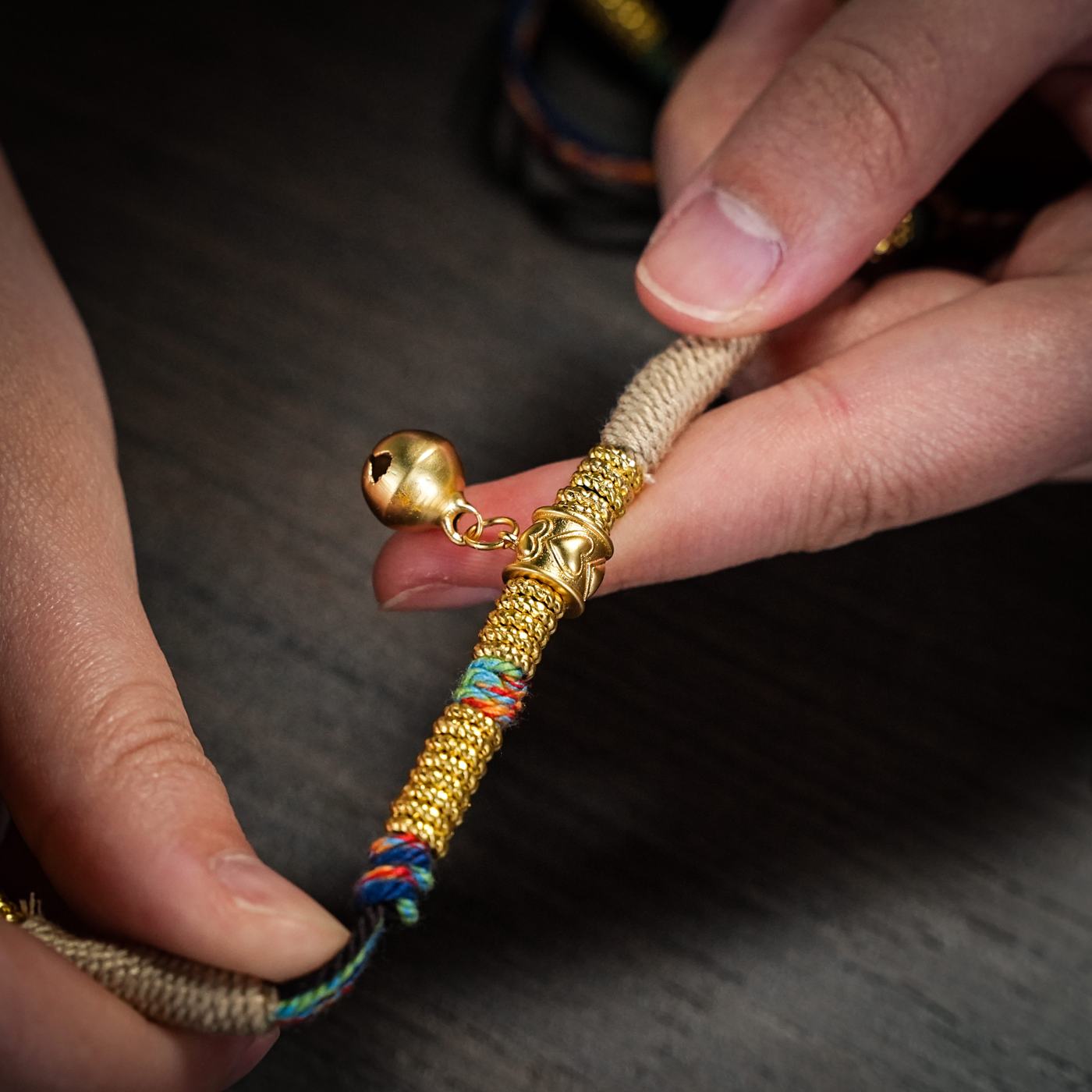
Search for "Tibetan Buddhist jewellery" and you will find a confusing mix: brass boxes, bead strings, red cords, black-and-brown patterned stones, tiny metal figures. Online descriptions often use the same handful of words — "sacred", "protective", "authentic" — for all of them, which makes it hard to tell what each object actually is. This guide sorts them out: what each piece traditionally was, what it was used for, and what to look for if you want to buy one honestly and wear it well.
Why Tibetan jewellery is functional first
In the Tibetan cultural world, many ornaments that look like jewellery to an outsider began as practical devotional tools. A mala counts mantra recitations. A gau holds a sacred image or text. A cord marks a blessing given by a teacher. Beauty mattered — Tibetan metalwork, coral and turquoise are justly famous — but the object's job came first. That is the best lens for understanding the whole category: ask "what does this do?" before asking "what does this symbolise?"
The gau box: a portable shrine
The gau (ga'u) is a small, usually hinged case worn on the chest or at the neck, traditionally made of silver, copper, brass or sometimes gold, and often set with turquoise or coral. Inside, historically, went a sacred image, a mantra, a relic or other devotional items — a miniature shrine you could take on the road. Variants appear across Tibet, Ladakh, Nepal and Bhutan, with differing shapes and decoration; larger ornate examples were status as well as devotion.
Today the format has been adapted for modern wear. Our own pendants are a contemporary expression of the same idea: a brass gau box with an engraved back and a miniature thangka figure within, on a hand-woven cord. They are hand-finished reproductions, made to be worn and cared for, not empowered ritual objects. For the full background, see The Spiritual Meaning of Thangka Gau Box Pendants, and for everyday handling, How to Wear and Use a Gau Box. If you wonder how a gau differs from other thangka formats, read Thangka vs Mandala vs Gau Box: What's the Difference?.
The mala: counting the breath and the mantra
A mala is a loop of beads used to count repetitions of a mantra or prayer. The most common count is 108 beads, a number that carries significance in several South Asian traditions; shorter strands of 54, 27 or 21 beads are also used, and many malas include marker beads and small counters to keep track of rounds. Traditional materials include bodhi seed, sandalwood, bone, wood and various stones. Each bead passes between the fingers as a phrase is recited, which is why malas are best understood as tools in motion, not necklaces — though many people wear them around the wrist or neck between sessions.
If you buy a mala to use, choose a bead size your fingers can handle comfortably, check that the knots between beads are secure, and learn the basic technique of turning beads without crossing over the guru bead. Some practitioners avoid letting a mala touch the ground or placing it below the waist.
Protection cords (sungdü)
A sungdü (srung mdud) is a knotted cord, commonly red, traditionally given by a lama after a blessing or ceremony and worn around the neck or wrist until it wears away on its own. Its significance comes entirely from the blessing: the cord is a physical reminder of a connection to a teacher and a commitment to practice. A cord bought off a shelf without that context is, honestly, a nice cord. That is not a criticism — woven cords are lovely — but it is worth being clear about the difference.
The braided cords on our pendants are woven by hand as a functional and decorative part of the piece; we do not present them as blessed protection cords.
Dzi beads
Dzi (gzi) beads are etched agate beads marked with patterns — circles often called "eyes", lines and waves — and have been prized in the Himalayan region for a very long time. Where they originally came from is still debated, and the finest antique examples are rare and costly. That scarcity is exactly why the market is full of imitations: modern dyed agate and resin beads that look similar are widely sold under the same name.
If you are drawn to dzi, treat claims about age and "natural power" with healthy scepticism. Reputable sellers will tell you plainly whether a bead is antique, a modern reproduction or a stylised imitation, and will price accordingly. A very cheap "ancient dzi" is almost certainly neither.
Thokcha amulets
Thokcha (thog lcags, roughly "thunder iron") are small, often dark metal amulets in animal, deity or symbolic shapes. In tradition they are associated with protection and with meteoritic or specially sourced iron, and they are typically worn on a cord or kept in a pouch. Many pieces now sold under the name are simply cast metal made in modern workshops; some are beautifully made, but the "meteorite iron" claim in particular deserves a question. Ask what the metal is and who made it.
At a glance: what each piece is for
| Piece | Traditional role | Worn how |
|---|---|---|
| Gau box | Portable shrine holding sacred images or texts | Neck or chest |
| Mala | Counting mantra recitations | Hand, wrist or neck |
| Sungdü cord | Marks a teacher's blessing | Neck or wrist |
| Dzi bead | Prized protective ornament | Necklace or bracelet |
| Thokcha | Protective amulet | On a cord or in a pouch |
How to judge what you're buying
"Authentic" is the most overused word in this category, so it helps to ask more specific questions:
- What exactly is it? Antique, handmade new, workshop reproduction or mass-produced? Honest sellers say which.
- Who made it, and where? A named workshop or region is a better sign than vague "traditional craftsmen".
- Does the description claim blessings or consecration? Be wary. Genuine consecration is done by a qualified teacher and is not something a retailer can add to a product page.
- Are the material claims specific? "Solid brass", "natural agate", "cotton cord" are checkable; "magical stone" is not.
- Does the price make sense? Very cheap "antique" pieces rarely are.
- Is the imagery correct? Deity figures have strict iconography. Our guides to the figures — for example Eight Zodiac Guardians or Protector Deities: How to Choose and the thangka painting primer — show what to expect.
If you decide on a pendant from this collection, browse the full range or use the Guardian Finder to start from your birth year. Once you own a piece, our brass care guide explains how to keep it looking well.
Common questions
What is the difference between a gau box and a mala?
A gau box is a small case worn as a portable shrine, holding an image or devotional item. A mala is a string of beads used to count mantra recitations. One is for carrying, the other for counting.
Are red protection cords the same as bracelets from a gift shop?
Traditionally a sungdü is given by a teacher after a blessing. A similar-looking cord from a shop is a woven cord without that context. It can still be a meaningful, attractive accessory, as long as it isn't sold as something it is not.
How can I tell if a dzi bead is real?
Genuine antique dzi are rare, expensive and difficult for non-experts to authenticate. Assume that inexpensive beads sold as "ancient dzi" are modern imitations unless a reputable seller documents otherwise.
Is it all right to wear these if I'm not Buddhist?
Many people do, and many Buddhists welcome respectful interest. Learn what the object means, avoid treating it as a trivial accessory, and see our guide to wearing Buddhist imagery respectfully.
Are your pendants blessed or consecrated?
No. They are hand-finished reproductions of thangka imagery in engraved brass gau boxes, made to wear and enjoy. We make no claim of consecration.
Which piece is best as a first purchase?
If you want something to wear daily with a clear meaning, a gau box pendant is a natural start. If you want to practise mantra counting, a simple mala is the more useful tool.