Wearing Buddhist Imagery Respectfully: Appreciation vs Appropriation
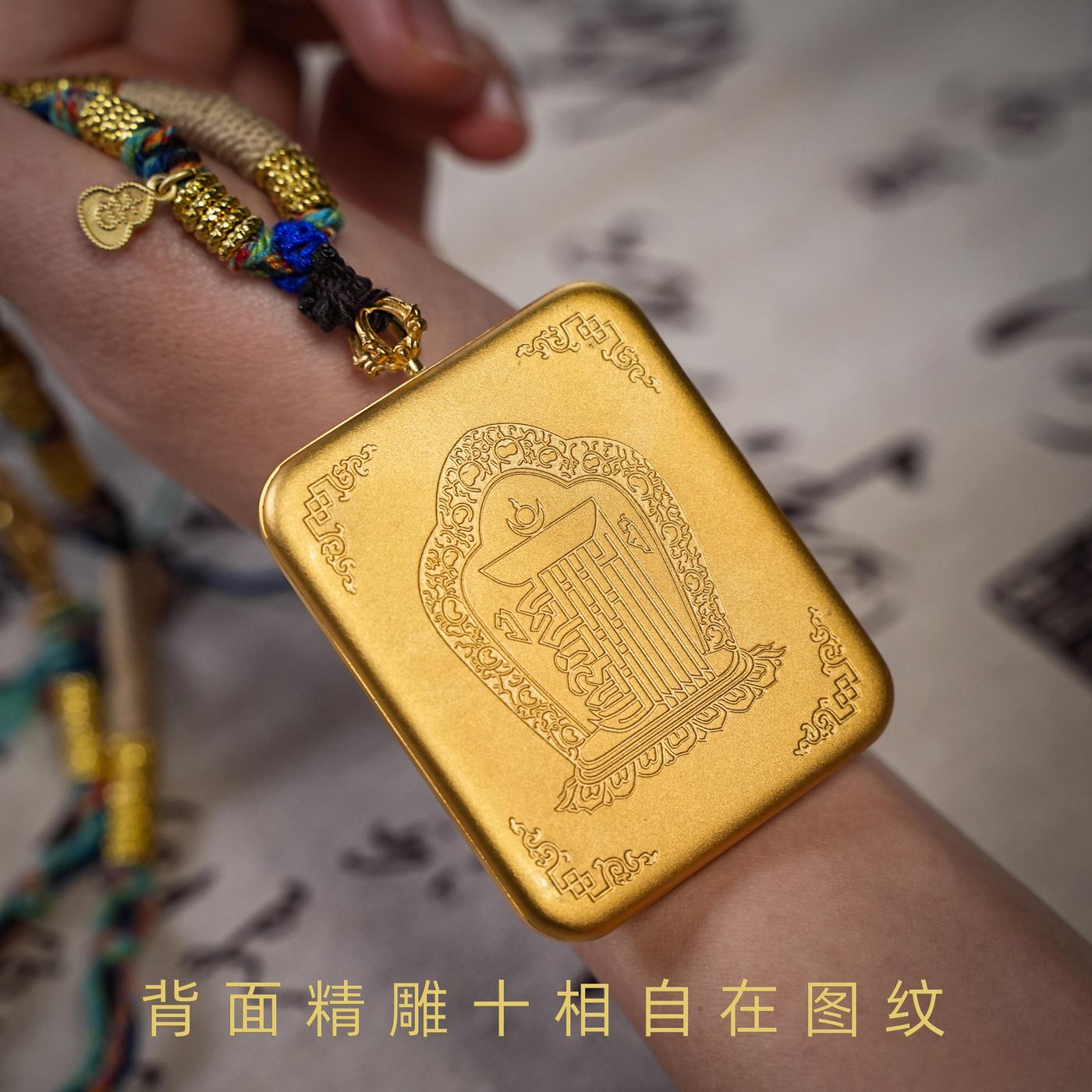
It is a fair question, and a good sign if you are asking it: is it disrespectful for me to wear Buddhist imagery if I'm not Buddhist? The honest answer is more nuanced than "yes" or "no". Appreciation and appropriation are separated less by who you are than by how you wear the object, what you know about it and where it came from. This guide gives practical, non-preachy guidance for wearing a thangka pendant — or any Buddhist image — with care.
The question behind the question
When people worry about appropriation, they are usually worried about one of three things: that the object's meaning is being flattened into decoration, that the culture it comes from is being profited from without credit, or that something sacred is being treated carelessly. These are different concerns, and they have different answers. Keeping them separate makes the rest of this easier.
What Buddhists themselves say
There is no single Buddhist authority who rules on this, and views vary across traditions, countries and individual teachers. In general terms, though, many Buddhists — including many Tibetan teachers — have historically been welcoming of anyone who approaches the tradition with sincere interest, and have encouraged people to learn the meaning of the images they use. The consistent complaint is not "non-Buddhists shouldn't wear this", but "please don't treat sacred images as a throwaway fashion item". The spirit of the guidance is care, not gatekeeping.
Because opinions differ, the best habit is humility: be willing to learn, to be corrected, and to adjust how you wear something when someone from the tradition tells you what feels respectful.
Where the real problems lie
These are the situations most often cited as disrespectful, and they are worth avoiding whoever you are:
- Imagery of the Buddha or deities on items worn or used below the waist — footwear, trousers, underwear, swimwear — or on things that are stepped on or sat on.
- Decorative misuse — as a party prop, bathroom décor, a drinks coaster, a joke or a costume.
- Tattoos on the lower body, particularly the feet, which several Buddhist-majority countries have taken seriously enough to act against.
- Claims that trade on sacredness — selling plain objects as "blessed", "monk-made" or "empowered" when they are not.
- Erasing the source culture, presenting Tibetan or Himalayan imagery as generic "zen" decoration with no context.
Practical guidelines for wearing and keeping
Wear it high
A pendant naturally sits at the chest, which is where the gau is traditionally worn. Avoid hanging it from a belt loop, a bag that sits on the floor or anything that places it below the waist.
Handle it with clean hands and care
Don't toss it on a table or the floor. When you take it off, put it down somewhere clean and slightly raised — a shelf, a dish, a small box. Our wearing guide covers everyday handling, and our care guide covers keeping the brass in good condition.
Remove it in the washroom and for some activities
Many people take sacred objects off before using the toilet, swimming, exercising heavily or sleeping on them — partly for respect, partly because it protects the piece. This is a courtesy, not a rule you must follow, but it is a thoughtful habit.
Don't wear it as a joke
Context matters. A pendant you wear with sincerity at a dinner is different from the same pendant worn ironically at a party.
When it's time to let go
If a piece becomes damaged beyond repair, avoid simply throwing it in the bin. Traditional practice is to return religious items to a clean, respectful place — a monastery or temple will often accept them, or you can bury them or leave them somewhere clean and quiet, ideally with a moment of thanks. Giving it to someone who will value it is another good option, and our gifting guide can help you choose.
Travelling with Buddhist imagery
Attitudes and rules differ by country. In several Buddhist-majority countries, disrespect toward Buddha imagery has led to detentions, fines or deportation of visitors, and some places restrict exporting large Buddha statues without a permit. A small pendant is rarely an issue, but the sensible approach is to check local guidance before travelling, wear imagery above the waist, keep it clean and avoid anything that could be read as mockery. In temples, follow posted rules and local customs — cover your shoulders and knees, remove shoes where asked and don't point your feet at images.
Buying with care
Where an object comes from matters as much as how you wear it. A few questions to ask before you buy:
- Is the seller clear about what the piece is? A hand-finished reproduction, an antique or a mass-produced item should be described as such. Our pendants are hand-finished reproductions of thangka imagery in engraved brass gau boxes; we do not describe them as blessed or consecrated.
- Is the imagery accurate? Deity figures follow strict iconography. A seller who has taken care over the details is more likely to have taken care over everything else. See our thangka painting primer for what to look for.
- Do they credit the tradition? Good sellers explain the meaning and origin of what they sell instead of using "Zen" or "spiritual" as generic labels.
- Is there a way to give back? Some buyers choose to donate to a Tibetan cultural or educational organisation, or to buy directly from Himalayan artisans where possible. This is a personal choice, not a requirement.
Going beyond the object
The most respectful thing you can do with a meaningful object is to learn what it means. If your pendant carries an image of one of the guardians, read about him: our Eight Zodiac Guardians guide introduces the whole group, and the individual guides to Mañjuśrī, Avalokiteśvara and others explain what each figure stands for. If you want to use the pendant as a mindfulness anchor, see A Meaningful Pendant as a Daily Grounding Ritual. For the wider family of Tibetan objects, read our guide to Tibetan Buddhist jewellery.
And if you find the tradition itself interesting, take that further: visit a local Buddhist centre, attend an open day or read from a qualified teacher. Curiosity is the opposite of appropriation.
Common questions
Is it cultural appropriation to wear a Buddhist pendant?
Not inherently. The concerns arise when the imagery is treated carelessly, worn as a joke, or sold with false claims. Wearing it with knowledge and respect — above the waist, kept clean, with an understanding of what it represents — is widely regarded as appreciation.
Can I wear a gau box pendant if I'm not Tibetan or Buddhist?
Many people do, and many Tibetans and Buddhists welcome sincere interest. Learn what the figure means and treat the piece with care.
Is it bad to wear it while sleeping or in the shower?
Not forbidden, but many people remove sacred objects for these situations out of courtesy and to protect the piece. Brass in particular benefits from staying dry; see our care guide.
What should I do if the pendant breaks?
Avoid putting it straight in the trash. Consider returning it to a temple or monastery, or placing it somewhere clean and quiet with a moment of respect, or passing it to someone who will value it.
Are your pendants consecrated?
No. They are hand-finished reproductions of thangka imagery, made to be worn and enjoyed. If a consecrated object matters to you, that comes through a teacher or monastery.
Which figure is a good choice for a first-time wearer?
Choose by the quality that speaks to you — focus, compassion, strength, hope or generosity — and read about the figure before you buy. The Guardian Finder offers a birth-year starting point if you prefer one.