A Meaningful Pendant as a Daily Grounding Ritual: A Practical Guide
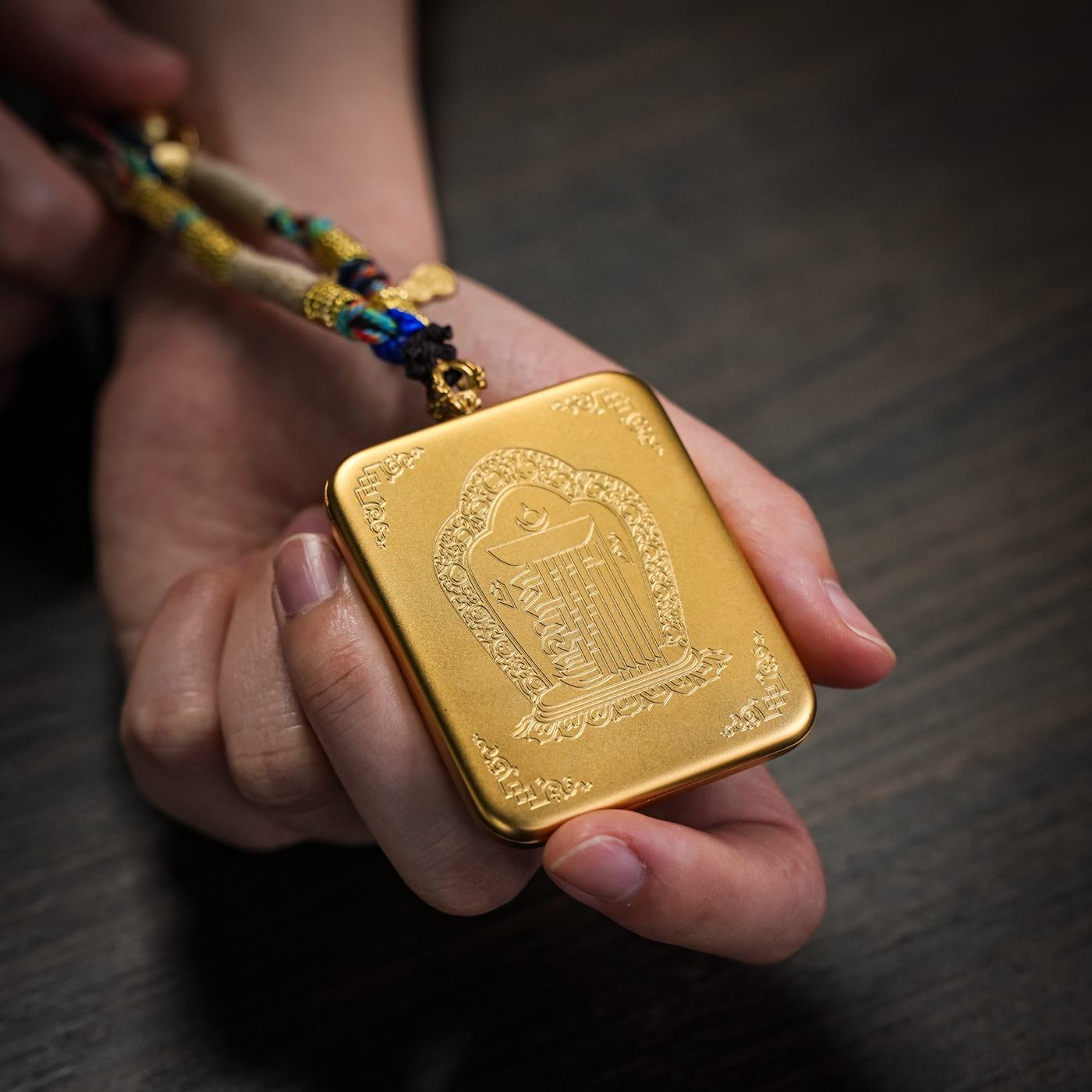
Most people who try mindfulness quit for the same quiet reason: not that it doesn't work, but that they forget. The intention is real on Sunday evening and gone by Tuesday at 10 a.m., buried under email. A phone reminder gets swiped away. What tends to last longer is something physical and a little bit beautiful — an object you touch, see or feel dozens of times a day, and that gently asks you to come back to the present moment. That is the whole idea behind using a meaningful pendant as a daily grounding ritual, and it is simpler, and more honest, than the wellness marketing around it usually suggests.
This guide explains how that works, what the Tibetan tradition behind the gau box adds to it, and a practical routine you can start today. One caveat up front: a pendant is a reminder, not a treatment. Nothing here is medical or mental-health advice, and if anxiety or low mood is affecting your daily life, talking to a qualified professional is the right first step — a ritual object can sit alongside that, never replace it.
Why a physical object helps at all
Habit researchers have long observed that new behaviours stick best when they are tied to an existing cue — something that already happens in your day and prompts the new action. Brushing teeth is a cue. A kettle boiling is a cue. The difficulty with mindfulness is that its natural cue ("whenever I feel stressed") arrives at exactly the moment you are least likely to remember the practice.
A worn object solves part of this. It is always with you, it is tactile, and it can be touched without anyone noticing. Every time your hand finds it — adjusting a collar, reaching for a cup — you get a free, unscheduled prompt. Psychologists sometimes call this a "touchstone" or anchor object; contemplative traditions have used prayer beads, knotted cords and small shrines for the same purpose for centuries. The object has no power of its own. What it does is lower the cost of remembering.
That framing matters because it keeps the practice honest. The active ingredient is you, pausing and breathing. The pendant just makes the pause easier to start.
What makes a good anchor object
Not every piece of jewellery works as a mindfulness anchor. In practice, the ones that do share four traits:
- Meaning you can name. If you can say in one sentence what it stands for — "steadiness", "clear thinking", "generosity" — touching it brings that sentence back. A purely decorative piece carries nothing to return to.
- A tactile surface. Engraved brass, a woven cord or a textured edge gives your fingers something to register. Smooth, featureless objects slip out of attention quickly.
- Some weight and presence. A pendant you forget you're wearing can't prompt anything. A little heft against the sternum, or a cord against the neck, keeps it just inside awareness.
- Something worth looking at. Fine detail rewards attention. A miniature painted figure or an engraved pattern invites a slow look, which is itself a small act of presence.
A gau box pendant — a small brass case holding a miniature thangka painting — happens to hit all four, which is part of why it works well for this purpose. We cover the object itself in The Spiritual Meaning of Thangka Gau Box Pendants.
What the Tibetan tradition adds
The gau (also written ga'u) is a traditional Tibetan portable shrine: a small, often hinged case worn on the body, historically holding a sacred image, a mantra or other devotional items so that the wearer carried a reminder of their practice everywhere — across mountains, on pilgrimage, through ordinary working days. Its purpose was never decoration. It was a way of keeping one's intention physically close.
That is a useful idea to borrow even if you are not Buddhist: the pendant is a portable reminder of what you are trying to practise. In the traditional context the figure inside stands for a quality — compassion, wisdom, steady strength — and wearing it is a way of keeping that quality in view. You can take the same approach with any of the figures in this collection. Our guide to Eight Zodiac Guardians and Protector Deities explains what each group represents, and the Guardian Finder offers a birth-year pairing if that is a meaningful starting point for you — though choosing by intention works equally well.
A note on honesty: our pendants are hand-finished reproductions of thangka imagery in engraved brass gau boxes. They are meaningful objects to wear and carry; they are not consecrated ritual items, and we do not claim otherwise. If an empowered object matters to you, that comes through a teacher or monastery, not a shop.
Three small rituals: morning, midday, evening
None of these takes more than a minute. The point is repetition, not duration.
1. Morning: set an intention (60 seconds)
Before checking your phone, hold the pendant in your palm. Take three slow breaths. Then choose one quality for the day, in plain words: "Today I'm practising patience." or "Today I want to listen before I answer." Put the pendant on. That is the whole ritual. Keep the intention small and specific — "be calm all day" is too large to remember; "pause before replying to that one difficult email" is not.
2. Midday: the three-breath return
Whenever you notice your hand touching the pendant — or any time you choose — treat it as a bell of mindfulness. Pause what you're doing. Feel the weight of the pendant, feel your feet on the floor, and take three full breaths. Then carry on. You are not trying to feel calm; you are simply noticing where your attention has gone and, if it helps, bringing it back. Do this five or six times a day and the touch itself begins to carry the reminder.
3. Evening: put it down on purpose
When you take the pendant off, hold it for a moment and ask one question: "Where did I remember today, and where did I forget?" No scoring, no judgement — forgetting is the normal state and noticing it is the practice. Then set it somewhere clean and visible, such as a small dish by your bed. Putting it down deliberately closes the day and makes the next morning's pick-up feel like a fresh start.
A seven-day starter plan
If you'd rather follow a structure than improvise, try one theme per day. Each day, do the morning intention and the evening question, and use the midday return whenever you notice the pendant.
- Day 1 — Arrival. Simply notice how often you touch it. No other goal.
- Day 2 — Breath. At each touch, take three slow breaths.
- Day 3 — Body. At each touch, scan from head to feet for tension and let one area soften.
- Day 4 — Listening. In one conversation, listen fully before responding.
- Day 5 — Gratitude. At each touch, name one specific thing you're thankful for.
- Day 6 — Kindness. Do one small, unannounced kind thing.
- Day 7 — Review. Sit for five quiet minutes with the pendant in hand. What changed? What will you keep?
After the week, drop whatever felt forced and keep the one thing that felt natural. A practice you actually do beats an ambitious one you abandon.
Common pitfalls
- Treating it as a lucky charm. If the pendant starts to feel like protection against bad outcomes, the practice has slipped into superstition. It is a prompt for your own attention, nothing more.
- Touching it compulsively. If reaching for it becomes anxious or automatic in a way that increases tension, soften the habit — and consider talking to a professional if the urge feels hard to control.
- Waiting to feel something. The goal isn't a special sensation. Many sessions will feel like nothing at all; that is normal.
- Perfectionism. Missing three days does not reset anything. Pick it up again the way you'd pick up the pendant.
- Ignoring the cultural roots. Using a Tibetan object for secular mindfulness is fine, but learn what the imagery means rather than treating it as generic decoration. We explore this in our guide to wearing Buddhist imagery respectfully.
Choosing a symbol that means something to you
Because the pendant works through meaning, choose the figure by the quality you most want to be reminded of, not by what looks most striking:
- Clear thinking and focus: Mañjuśrī — see the Mañjuśrī guide.
- Compassion and patience: Avalokiteśvara — see the Guanyin guide.
- Steady strength through difficulty: Mahāsthāmaprāpta — see the Mahāsthāmaprāpta guide.
- Hope and new beginnings: Maitreya — see the Maitreya guide.
- Generosity and enough-ness: Yellow Jambhala — see the Jambhala guide.
You can browse the full range in the collection, and if you are choosing for someone else, our gifting guide walks through it.
Common questions
Do I need to be Buddhist to use a pendant this way?
No. Many people wear a meaningful object purely as a mindfulness anchor. The respectful approach is to learn what the imagery represents and treat it with care, rather than as a generic accessory.
Is there scientific proof that jewellery improves mindfulness?
No — we make no such claim. What is well established is that environmental cues help new habits stick; a worn object is one such cue. The benefit comes from the practice you attach to it, not from the object itself.
How often should I touch or look at the pendant?
There is no required number. A natural rhythm is the morning intention, a handful of unscheduled touches during the day, and the evening question. If it feels forced, do less.
Can I use it while meditating?
Yes. Some people hold it in the palm at the start of a sit as a way of settling in, then let it rest against the chest. It is entirely optional.
What if I keep forgetting?
That is the normal starting point. Keep the practice tiny — one breath at one touch — and place the pendant where you'll see it first thing, so the morning pick-up is hard to miss.
Is this a substitute for therapy or medical care?
No. A mindfulness anchor can support a healthy routine, but it is not a treatment. If you are struggling with anxiety, low mood or stress that affects your life, please speak to a qualified professional.